The one-page laundry symbols chart
Every care symbol on a single page, in plain English — made to be printed and taped inside a cabinet door.
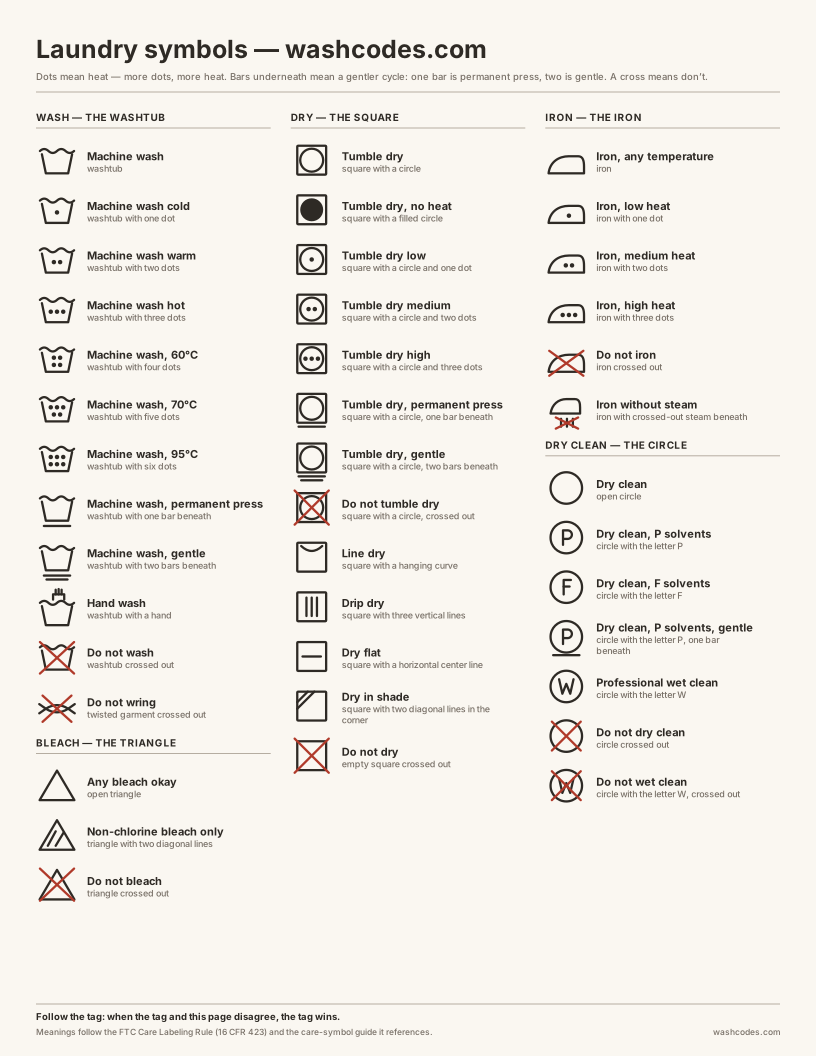
All 41 symbols, five families, one sheet — it prints on a single US Letter page with the site’s navigation left off. The download is a plain SVG file: it opens in any browser, scales to any paper size, and needs nothing installed.
Laundry symbols — the whole tag on one page
Dots mean heat — more dots, more heat. Bars underneath mean a gentler machine cycle: one bar is permanent press, two is gentle. A cross through any symbol means don’t.
Wash — the washtub
-
Machine wash
Machine washing is fine — any normal cycle, and any temperature unless dots inside the tub say otherwise.
-
Machine wash cold
Machine wash cold — water up to 30°C, about 85°F.
-
Machine wash warm
Machine wash warm — water up to 40°C, about 105°F.
-
Machine wash hot
Machine wash hot — water up to 50°C, about 120°F.
-
Machine wash, 60°C
Machine wash up to 60°C (140°F) — a heavy-duty setting mostly seen on bedding, towels, and workwear.
-
Machine wash, 70°C
Machine wash up to 70°C (160°F) — a sanitizing-level wash, rare on home garment tags.
-
Machine wash, 95°C
Machine wash up to 95°C (200°F) — near-boiling, reserved for things like hospital linens.
-
Machine wash, permanent press
Use the permanent press cycle — a normal wash with a cool-down rinse and slower spin.
-
Machine wash, gentle
Use the gentle or delicate cycle — slow agitation and a slow spin.
-
Hand wash
Wash by hand in cool water — the tag is telling you to keep it out of the machine.
-
Do not wash
Don't wash it at home at all — water itself is the problem. This is a garment for the cleaner.
-
Do not wring
Don't twist or wring the water out — press it out flat between towels instead.
Bleach — the triangle
-
Any bleach okay
Any bleach is okay when you need it, chlorine included.
-
Non-chlorine bleach only
Only non-chlorine bleach — the oxygen or color-safe kind — and only when needed.
-
Do not bleach
No bleach of any kind — not even the color-safe kind.
Dry — the square
-
Tumble dry
Tumble drying is fine — any heat, unless dots inside the circle say otherwise.
-
Tumble dry, no heat
Tumble dry on air only — no heat at all.
-
Tumble dry low
Tumble dry on low heat.
-
Tumble dry medium
Tumble dry on medium heat.
-
Tumble dry high
Tumble dry on high heat — the fabric can take your dryer's hottest setting.
-
Tumble dry, permanent press
Tumble dry on the permanent press setting — medium heat with a cool-down at the end.
-
Tumble dry, gentle
Tumble dry on the gentle cycle — low heat and gentler tumbling.
-
Do not tumble dry
Keep it out of the dryer — air dry instead.
-
Line dry
Hang it on a line or bar to dry.
-
Drip dry
Hang it up soaking wet and let it drip — no wringing or spinning first.
-
Dry flat
Lay it flat on a towel or rack to dry.
-
Dry in shade
Dry it out of direct sunlight — it rides along with a line-dry or flat-dry symbol.
-
Do not dry
Don't dry it yourself by any method — it appears on garments that shouldn't be home-washed either.
Iron — the iron
-
Iron, any temperature
Ironing is fine at any temperature, with or without steam.
-
Iron, low heat
Iron on low — up to about 110°C — for acetate, acrylic, and nylon.
-
Iron, medium heat
Iron on medium — up to about 150°C — for wool, silk, and polyester blends.
-
Iron, high heat
Iron on high — up to about 200°C — for cotton and linen.
-
Do not iron
Don't iron it at all — no pressing, no steam.
-
Iron without steam
Iron dry — steam is the problem, not the heat.
Dry clean — the circle
-
Dry clean
Dry cleaning works for this garment — any normal solvent and process.
-
Dry clean, P solvents
Dry clean with perchloroethylene or hydrocarbon solvents — the P is an instruction to your cleaner, not to you.
-
Dry clean, F solvents
Dry clean with petroleum solvent only — a gentler process your cleaner knows by the letter F.
-
Dry clean, P solvents, gentle
Dry clean in P solvents on a reduced, gentler process — the bar under the circle asks the cleaner to go easy.
-
Professional wet clean
Professional wet cleaning — a cleaner's controlled water process, not a home wash.
-
Do not dry clean
No dry cleaning — the solvents themselves damage this garment.
-
Do not wet clean
No professional wet cleaning — solvent-based cleaning is the only professional route.
Follow the tag: when the tag and this page disagree, the tag wins. · washcodes.com
What to do with it
Tape it inside the laundry cabinet door, where you are standing when the question comes up. The sheet gives you the one-line answer; every family has a page here with the longer one — including what happens when you ignore the symbol, which is the part worth knowing before you guess.
Holding a tag with several symbols on it at once? Tap them into the decoder and it reads them together as one plan — the careful reading, never a loosened one.